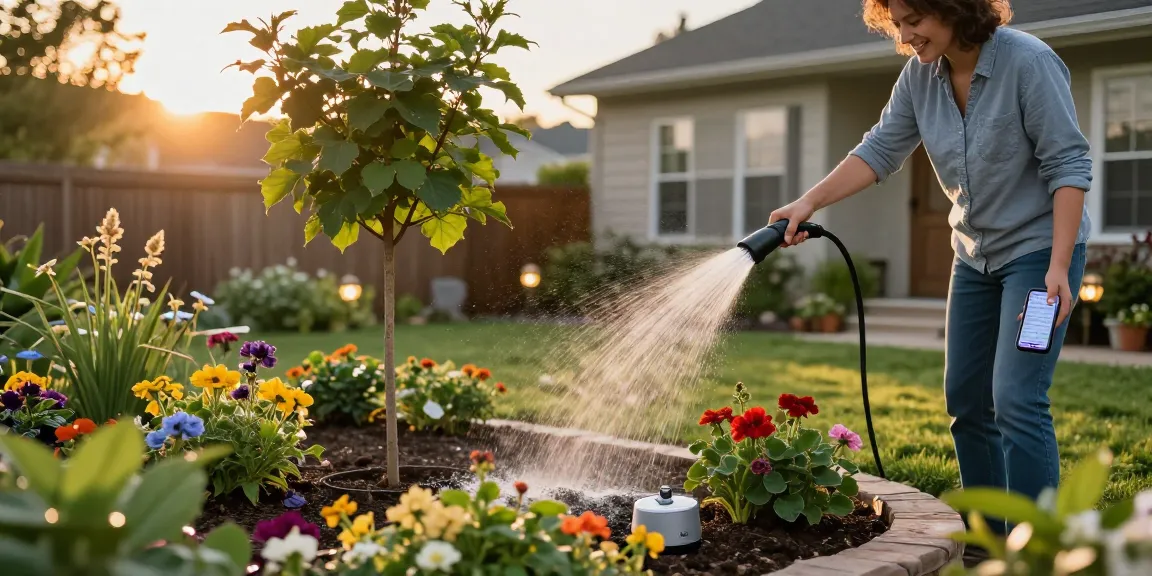
When James noticed brown patches forming near his driveway after a week of hot, windy weather, he blamed the sprinkler and cranked the timer to run every morning. Two weeks later the patch had spread and the lawn looked patchy everywhere else. Across town, Maria’s new sod thrived after she switched from daily 10‑minute sprinklings to twice‑weekly deep soaks. These real yard stories show why knowing how often to water your lawn for best results matters — the frequency, duration, and delivery method all change outcomes.
Problem: Shallow, Frequent Watering — Solution: Deep, Infrequent Soaks
Challenge: Many homeowners water for short periods every day because it feels safer. But this encourages shallow roots that dry out fast and need more water over time. In James’s case, daily 10‑minute cycles on a surface sprinkler kept water near the topsoil and allowed heat and wind to evaporate much of it.
Why deep watering helps
Deep, infrequent watering encourages roots to grow downward, which makes turf more drought tolerant and reduces disease risk. For cool‑season grasses like fescue, aim for about 1 to 1.5 inches per week; warm‑season grasses like Bermuda often do well with about 0.5 to 1 inch weekly during their peak season. A practical approach is 20–40 minutes twice per week with a standard sprinkler pattern, depending on your system’s output and soil type.
Real setup match
If you have a small to medium lawn with a portable sprinkler, run a catch‑can test to measure application rate (inches per hour), then schedule two sessions per week long enough to reach the weekly target. For larger lawns, a smart in‑ground system with a WiFi timer takes the guesswork out — a WiFi timer such as the RainPoint model lets you program weekly run times and adjust remotely when weather changes.
Problem: Uneven Coverage — Solution: Tailored Zones and Smart Controls
Challenge: Lawns with slopes, shade pockets, or mixed soil types often get uneven moisture. Maria’s backyard had a shady north side and a sunny south lawn; she noticed the shady area stayed greener but felt spongy, while sun sections browned quickly. The fix was zoning and timing.
Zone-based strategy
Split the yard into zones that share similar sunlight and soil. Shade areas need less water and less frequent deep watering; sunny sections need more. A common mistake is running every zone the same length. Instead, program shorter cycles for shady zones (e.g., once weekly at a reduced duration) and longer cycles for full sun zones (twice weekly). According to university extension guidance, adjusting run times by zone can cut water use while improving turf health.
Use case with RainPoint
For homeowners ready to automate zoning, a WiFi timer from RainPoint can handle that schedule automatically and let you tweak one zone from your phone after a heat wave. If you prefer step watering for slopes, enable cycle‑and‑soak runs (shorter cycles separated by soak periods) to reduce runoff — you can learn how often to water your lawn for best results with cycle-and-soak guidance tailored to slope and soil type.
Problem: Vegetable beds and flower borders steal water — Solution: Precise Delivery
Challenge: When a lawn sits next to vegetable beds or flower borders, overhead sprinklers waste water on non‑lawn areas and promote fungal disease by wetting foliage. In a suburban home where the vegetable patch borders the turf, competing water needs cause frustration.
Match the right system
Drip irrigation is ideal for garden edges and beds because it delivers water to roots, not leaves. Use a dedicated drip line or soaker hose for beds and keep the lawn on a separate zone. For vegetable gardens, micro‑emitters and drip tape provide targeted saturation and can reduce water use by 30–50% compared with sprinklers, according to many extension studies.
Scenario: mixed yard plan
Set the lawn on a twice‑weekly deep soak schedule, then run the vegetable drip for shorter, more frequent sessions tailored to crop needs (often every other day during establishment). A combined setup with a smart controller lets you automate both schedules and avoid overwatering the beds while keeping grass healthy.
Problem: Pots and containers dry out fast — Solution: Slow, Consistent Self‑Watering
Challenge: Potted plants and window boxes need different handling. They lose moisture rapidly and can stress plants if left to standard lawn cycles. Neighbors often overcompensate by overwatering the pots every few days.
Best practice for containers
Self‑watering options—reservoir pots, wicking systems, or dedicated micro‑drip lines—provide steady moisture without daily attention. A small emitter delivering 0.5–1 gallon per hour for 30–60 minutes every 1–3 days can keep most containers happy in summer, depending on plant type and pot size.
Real example
A homeowner with ten mixed containers switched to individual drip lines tied to a single micro‑manifold and ran 30 minutes every other day. Plant stress dropped and she cut back manual watering sessions by half. If you prefer a manual option, soaker hoses or a simple reservoir pot can work, but smart timers make the schedule worry‑free.
Practical Tools, Timers, and a Simple Watering Schedule Table
Challenge: Knowing how often to water your lawn for best results is easier if you have clear targets and tools. Use a rain gauge or smartphone weather app plus a timer to keep the plan consistent. The EPA reports that smart irrigation controllers can save substantial amounts of water by avoiding unnecessary run times; some homeowners report savings of up to 15%–30% on outdoor water use (EPA WaterSense recommends smart controllers for efficiency). For specific local guidance, check extension resources for your state.
Yard TypeWeekly Water TargetTypical ScheduleCool‑season turf (fescue)1–1.5 inches2 sessions/week, 20–45 min each (adjust by nozzle)Warm‑season turf (Bermuda)0.5–1 inch1–2 sessions/week, 20–40 min eachVegetable garden (drip)Varies by cropShort, frequent runs (every 1–3 days) with drip emittersContainer plantsDepends on pot size30–60 min every 1–3 days via micro‑drip or self‑watering
- Perform a catch‑can test to determine your sprinkler’s inches per hour.
- Adjust for rainfall and season — less in cooler months, more in heat waves.
- Use cycle‑and‑soak on slopes to reduce runoff.
Smart control systems and proper matching of system types to garden areas are the real keys. A WiFi timer such as the RainPoint model takes daily guessing out of the equation and lets you prioritize water where it’s needed most without constant manual changes.
For localized watering timing, check your university extension or the EPA WaterSense pages for region‑specific guidance .